

The AMS (Application Management Service) service is designed to respond to the needs of our customers to manage, manage and maintain their software applications in optimum working order, ensuring that they can evolve and respond Continually to meet the needs of your business, allowing the company to focus on its own activity by giving more resources to the core of your business through the outsourcing of this service.
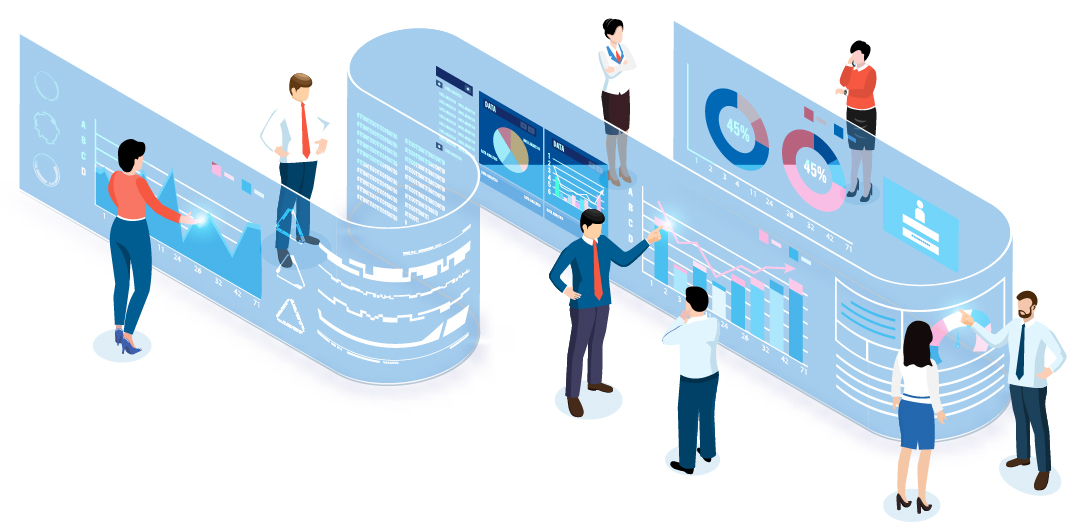
The AMS implementation ensures support availability and business continuity. Its implementation implies the adequate functional and technical training in the applications for the resources destined to the service, the technological integration with the client through the appropriate tools, a fluent communication and a working environment Highly collaborative between the company and EMMSA to coordinate efforts, facilitate response times, simplify tasks and seek to ensure the satisfaction of users.
The AMS service includes:
Can reach business applications:
Our services cover the gamut, from application development to data management, quality engineering and beyond.

Provides an accurate understanding of your legacy systems, enabling us to develop the business case around renewing existing applications.

Migrates your applications to a standards-based environment while minimizing disruption to the business – using rehosting, refactoring, digital decoupling and containerization techniques.

Enhances your applications’ functionality, which makes them easier to maintain and part of a highly-scalable framework.

Extracts business requirements from software applications and recasts them in natural or formal language for further analysis or forward engineering.

Enhances your applications to run on newer, less expensive and more efficient cloud-based technology platforms.
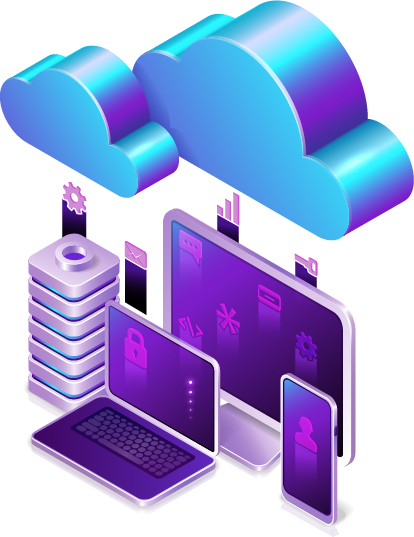
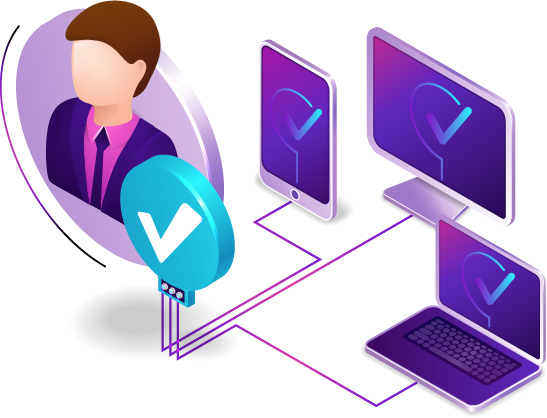
Cloud is here and now. It is no longer the next big thing in the IT space. Applications built over the Cloud offer the much needed flexibility and scalability for accommodating thousands of concurrent users at the same time. Application development and management can be easily handled by teams located globally. It does not require specific software configuration on the local client machines. Besides, these applications over the Cloud can be easily accessed, maintained, triaged, and trouble-shooted, anytime anywhere.
24x7 L1, L2, L3 support is an ideal scenario in Application Management. However, the customer business has to judiciously select the preferred Application Management and Support model that suits their business requirement and budget. Businesses can opt for 8x5 and 16x5 models within the ambits of predefined SLAs and turnaround time.
Business requirements change from time to time and not all commercial off-the-shelf products from different OEMs offer a complete solution to business requirements. System Integrators address the business requirement to provide a complete solution. They are aware of the pros and cons of products available in the market and can tailor solutions while trying to eliminate technical debt. They help businesses to consider a wide variety of software options available and shortlist the best ones for an upgrade.
API Management involves developing and publishing application programming interfaces or APIs, controlling their access, tapping and analysing application usage statistics, and generating reports for performance management.
APIs are used to make application architecture more composable and integrable with other applications. API management is a best practice in the overall application lifecycle. It allows improving the abstraction levels of an application to offer improved integration and a strategic edge.
